
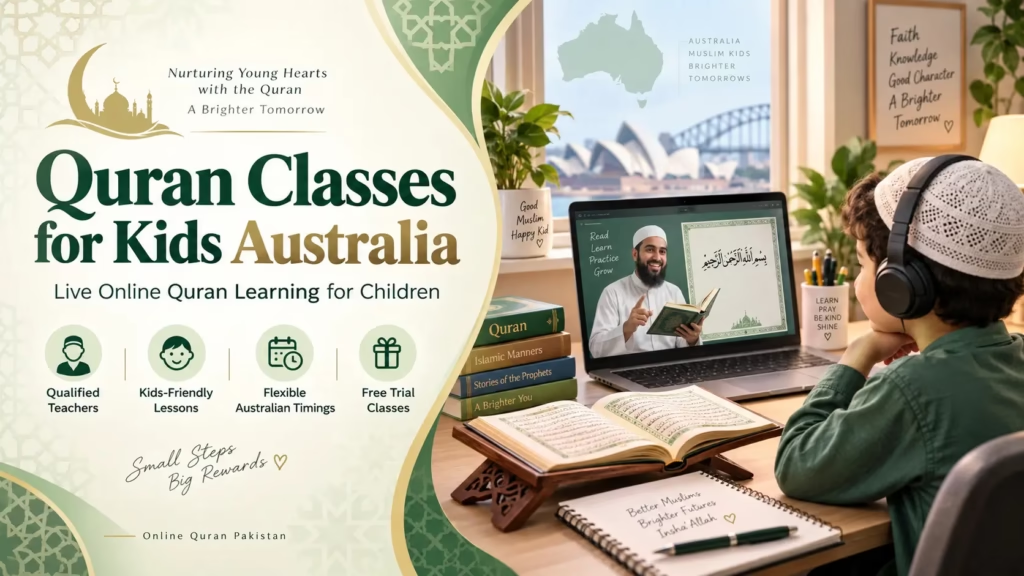
Finding reliable Quran classes for kids in Australia can be difficult when school hours, homework, family commitments and travel all compete for a child’s time. Online Quran classes make it possible for children to learn from home with a qualified teacher while following a schedule that works with Australian time zones.
Children can begin from their current level, whether they are learning Arabic letters for the first time, improving Quran reading, studying Tajweed or working on Hifz.
Online Quran Pakistan offers live Quran learning for children with male and female teachers, flexible class schedules and courses designed for beginners as well as progressing students.
What Are Online Quran Classes for Kids?
Online Quran classes are live lessons in which a child studies Quran with a teacher through an online meeting platform.
Unlike prerecorded courses, live Quran lessons allow the teacher to hear the child’s recitation, identify pronunciation mistakes and provide correction immediately.
Depending on the child’s level, lessons may cover:
- Noorani Qaida
- Quran reading
- Tajweed
- Makharij
- Hifz-ul-Quran
- Short Surahs
- Salah
- Daily duas
- Basic Islamic Studies
The course should match the learner’s age, reading ability and learning goals rather than following the same programme for every child.
Why Australian Families Choose Online Quran Classes
For many Muslim families in Australia, access to a suitable Quran teacher depends on where they live.
Families in major cities may have several local options, while those living farther from Islamic centres may have fewer choices. Even when a local teacher is available, travelling several times a week can be difficult alongside school and work schedules.
Online learning removes much of that travel.
A child can attend a live Quran class from home in Sydney, Melbourne, Brisbane, Perth, Adelaide, Canberra or elsewhere in Australia.
Parents can also choose class timings that fit more naturally around school and family routines.
Quran Classes for Beginners
A child does not need to know Arabic before joining Quran classes.
Complete beginners can start with Arabic letters and gradually develop the skills needed to read Quran independently.
A typical beginner pathway may include:
Arabic letter recognition
The child learns the shape and correct sound of each Arabic letter.
Harakat
Students begin reading letters with Fatha, Kasra and Damma.
Joining letters
They learn how Arabic letters change and connect inside words.
Sukoon, Shaddah and Madd
These foundational reading rules help children recognise common Quranic patterns.
Simple Quranic words
The teacher gradually moves from individual sounds to complete words and short phrases.
Once the child has a strong enough foundation, they can begin reading directly from the Quran.
Noorani Qaida Classes for Kids in Australia
Noorani Qaida is commonly used to teach children the foundations of Arabic and Quran reading.
It is particularly useful for beginners because lessons progress gradually rather than placing the child directly into Quran pages they cannot yet read confidently.
A good Qaida class should focus on both recognition and pronunciation.
Children should not simply memorise how a page sounds. They should understand how letters, vowels and symbols work so they can eventually read unfamiliar Quranic words independently.
Teacher correction is especially important during this stage because pronunciation habits formed early can continue into later Quran recitation.
Online Quran Reading Classes
Children who already understand basic Arabic reading can move into regular Quran lessons.
At this stage, the teacher helps the student improve:
- Fluency
- Word recognition
- Pronunciation
- Makharij
- Stopping and starting
- Reading confidence
- Tajweed application
Progress should not be judged only by the number of pages completed.
A child who reads one page accurately and understands corrections may be developing stronger Quran-reading skills than a student who rushes through several pages while repeating the same mistakes.
Tajweed Classes for Kids
Tajweed helps children learn how to recite Quran correctly.
For young students, Tajweed is usually easier to understand when rules are introduced gradually and applied directly during recitation.
Lessons may cover areas such as:
- Makharij of Arabic letters
- Madd
- Ghunnah
- Qalqalah
- Noon Sakinah and Tanween
- Meem Sakinah
- Rules of stopping
- Correct letter characteristics
Children do not necessarily need to memorise complex definitions before they can improve their recitation.
A teacher can introduce one rule, demonstrate it and then help the child recognise and apply it while reading Quran.
This practical method can make Tajweed easier to remember.
Hifz Classes for Kids in Australia
Children who want to memorise Quran need more than a new lesson every day.
Successful Hifz requires a balance between new memorisation and revision.
A structured Hifz routine may include:
New lesson: The verses the child is currently memorising.
Recent revision: Portions learned during the previous days.
Older revision: Previously memorised Surahs or Juz that must be maintained.
The amount of new memorisation should depend on the child’s age, ability, school workload and available practice time.
Giving a child more verses than they can revise properly may increase short-term progress while weakening long-term retention.
Consistency is usually more valuable than speed.
Male and Female Quran Teachers
Parents often have a preference regarding who teaches their children.
Some families prefer a female Quran teacher for girls, while others request male teachers for boys.
Online Quran learning can make it easier to find a teacher who matches these preferences.
Beyond gender preference, parents should also consider whether the teacher:
- Has strong Quran recitation
- Understands Tajweed
- Communicates clearly
- Has experience teaching children
- Is patient with beginners
- Corrects mistakes consistently
- Can keep the child engaged
The right teacher is not simply someone who knows how to recite Quran well. Teaching children requires a separate set of skills.
What Makes a Good Quran Teacher for Children?
A good children’s Quran teacher should be knowledgeable, patient and attentive.
During a lesson, the teacher should listen carefully rather than allowing mistakes to pass unnoticed.
When a child struggles with a word, the teacher can:
- Identify the difficult sound.
- Pronounce it correctly.
- Ask the child to repeat it.
- Revisit it during the lesson.
- Check it again in future classes.
Correction should be clear without making the child afraid of making mistakes.
Children learn more effectively when they feel comfortable reading aloud and asking questions.
Quran Classes That Fit Australian Time Zones
Australia covers multiple time zones, which makes scheduling an important consideration for international online Quran classes.
A family in Sydney or Melbourne does not follow the same local time as a family in Perth.
Daylight-saving changes can create additional differences during certain parts of the year.
For this reason, parents should always arrange lessons according to their own Australian local time.
Useful class periods may include:
- Before school
- After school
- Early evening
- Weekend sessions
The ideal schedule depends on the child.
A class should be held at a time when the student is reasonably alert rather than tired after a long day.
How Long Should a Quran Class Be for a Child?
Longer lessons are not always better.
Young children often learn more effectively through shorter, focused sessions.
For regular Quran reading or Qaida, a lesson of around 30–35 minutes can provide time for revision, new learning, reading and correction.
Hifz students may need around 40–45 minutes because memorisation requires additional listening and revision.
The right class length can still vary depending on age and concentration.
A six-year-old beginner and a fourteen-year-old Hifz student should not necessarily follow the same lesson structure.
How Many Quran Classes Should a Child Take Each Week?
There is no single schedule that suits every child.
Some children may study two or three days per week, while others attend four or five days.
The right frequency depends on:
- Age
- Course
- School routine
- Learning goal
- Home practice
- Attention span
- Memorisation target
For beginners, several short sessions can help reinforce Arabic recognition and pronunciation.
For Hifz students, more frequent contact with the teacher may be useful because memorisation benefits from consistent repetition.
The most effective schedule is one the family can maintain regularly.
A Simple Weekly Quran Routine for Australian Kids
A child’s progress does not depend only on lesson time.
Short home revision can make each class more productive.
For example:
Class day
Attend the live lesson and practise the teacher’s assigned work afterward.
Next day
Spend 10–15 minutes reviewing the same page, letters or verses.
Before the next class
Read the lesson once again so the child joins prepared.
This routine does not require hours of study.
Regular repetition is usually more useful than trying to complete a large amount of revision once a week.
Quran Classes for Young Children
Young children require a different teaching approach from teenagers.
Lessons should be simple, structured and encouraging.
A teacher may combine:
- Letter recognition
- Listening
- Repetition
- Short reading exercises
- Revision
- Duas
- Basic Islamic manners
Parents can help by creating a quiet class environment and making sure the child has their Qaida or Quran ready before the lesson begins.
For very young children, parental support near the beginning of a class can also make online learning easier.
Quran Classes for Older Kids and Teenagers
Older children may already know how to read Quran but need improvement in specific areas.
Common goals include:
- Reading more fluently
- Correcting long-standing pronunciation mistakes
- Improving Tajweed
- Beginning Hifz
- Revising memorised Surahs
- Understanding basic Islamic teachings
Older learners may benefit from clearer progress targets.
For example, rather than simply saying “improve Tajweed”, the teacher may focus first on Makharij, then Madd and then other recurring recitation issues.
Specific targets make progress easier to recognise.
Online Islamic Studies for Kids
Some parents want their child’s Quran lessons to include basic Islamic education as well.
Along with Quran learning, children may study topics such as:
- How to perform Salah
- Daily duas
- Islamic manners
- Basic beliefs
- Stories from the Seerah
- Selected Hadith
- Islamic responsibilities
- Respect for parents and teachers
Age-appropriate Islamic Studies can help children connect Quran learning with everyday Muslim life.
Can Kids Learn Quran Online Effectively?
Yes, children can learn Quran online when the class is live, the teacher provides regular correction and the student attends consistently.
The effectiveness of online Quran learning depends on several factors:
Teacher quality: The teacher must identify and correct mistakes.
Regular attendance: Long gaps can slow progress.
Suitable class timing: The child should be mentally ready to learn.
Home revision: Even short revision sessions can strengthen learning.
Parent support: Younger children often benefit when parents monitor attendance and homework.
Technology is simply the delivery method. The quality of teaching and consistency of learning remain the most important factors.
What Device Does a Child Need?
Most online Quran classes can be taken using:
- Laptop
- Desktop computer
- Tablet
- Smartphone
A larger screen may be more comfortable because the student can see Quran pages or shared teaching material more clearly.
Headphones can also help in noisy homes, but they are not essential when the learning environment is already quiet.
A reliable internet connection is more important than having expensive equipment.
Online Quran Classes in Sydney
Families looking for Quran classes for kids in Sydney can use online learning to avoid travel and arrange lessons around school hours.
Sydney families should also remember that local time can change seasonally because of daylight saving.
Always confirm the class according to current Sydney local time when arranging international lessons.
Online Quran Classes in Melbourne
Children in Melbourne can learn Quran online from home through live classes without needing to travel to a teaching centre several times each week.
Courses can include beginner Qaida, Quran reading, Tajweed, Hifz and Islamic Studies.
A consistent after-school schedule can make regular Quran learning easier to maintain.
Online Quran Classes in Brisbane
Queensland families can also use online classes to find suitable Quran teachers beyond their immediate local area.
Parents should confirm Brisbane local time when booking lessons because Queensland’s daylight-saving arrangements differ from some other Australian states.
Online Quran Classes in Perth
Perth operates significantly earlier than Australia’s eastern cities.
Families seeking Quran classes for kids in Perth should therefore make sure the academy schedules classes specifically according to Western Australian local time rather than using a generic “Australia time”.
This is especially important when the teacher is based overseas.
Online Quran Classes in Adelaide and Canberra
Families in Adelaide and Canberra can also arrange online Quran lessons according to their local schedules.
Because Australian time-zone differences can change throughout the year, keeping the student’s city recorded with the class schedule helps reduce timing confusion.
How Parents Can Monitor Quran Progress
Parents do not need to sit beside their child during every lesson.
However, they should know what the student is currently learning.
Useful questions include:
What page or lesson is my child studying?
Which pronunciation mistakes need practice?
Is my child completing revision?
Are they improving in fluency?
Should we increase or reduce the lesson pace?
Is the current teacher suitable for them?
Progress should be measured by improved ability, not only by how quickly the child moves forward.
Questions to Ask Before Choosing Quran Classes
Before enrolling, parents should ask:
- Is the class live?
- Does the teacher have experience with children?
- Are male and female teachers available?
- Which course should my child begin with?
- How long is each lesson?
- Can the timing follow Australian local time?
- What happens if the teacher misses a lesson?
- Can we change teachers if needed?
- Is progress monitored?
- Are trial lessons available?
Clear answers to these questions make it easier to compare Quran learning options.
Try the Class Before Committing
A trial class can tell parents much more than an advertisement.
During the trial, pay attention to:
- How the teacher communicates
- Whether mistakes are corrected
- Whether your child understands instructions
- Whether the teaching pace feels appropriate
- How comfortable your child feels
- Whether the scheduled time works for your family
The teacher can also assess whether the student should begin with Noorani Qaida, Quran reading, Tajweed or another course.
Online Quran Pakistan allows families to begin with trial classes so they can experience the learning method before starting a regular schedule.
Frequently Asked Questions
What age can a child start online Quran classes?
Children can begin at a young age when they are able to follow simple instructions and concentrate for a short lesson. The starting course should match the child’s ability rather than age alone.
Does my child need to know Arabic?
No. Complete beginners can start with Arabic letters through Noorani Qaida before moving to Quran reading.
Can my child learn Tajweed online?
Yes. A live teacher can listen to the child’s recitation, demonstrate correct pronunciation and correct Tajweed mistakes in real time.
Are female Quran teachers available for girls?
Many online Quran programmes offer both male and female teachers. Parents should confirm teacher preference and availability when arranging the class.
Can children memorise Quran online?
Yes. Hifz can be taught online when lessons include new memorisation, recent revision and regular review of previously memorised portions.
How many days per week should my child study Quran?
It depends on the child’s age, course and learning goal. Two or three days may suit some beginners, while Hifz students may benefit from four or five days.
How long does it take a child to learn Quran reading?
There is no fixed timeline. Progress depends on the child’s starting level, lesson frequency, practice, age and individual learning speed.
Are online Quran classes available throughout Australia?
Yes. Since lessons are online, children can study from Sydney, Melbourne, Brisbane, Perth, Adelaide, Canberra and other Australian locations as long as a suitable class time can be arranged.
Start Quran Classes for Your Child in Australia
The right Quran programme should help your child progress without making Quran learning unnecessarily stressful.
For a complete beginner, that may mean starting with Arabic letters and Noorani Qaida.
For another student, it may mean improving Tajweed, building fluency or following a structured Hifz routine.
What matters most is choosing a suitable teacher, maintaining a realistic schedule and giving the child enough time to practise between lessons.
If your family is looking for Quran classes for kids in Australia, Online Quran Pakistan provides live online Quran learning with male and female teachers, flexible timings and courses for different ages and ability levels.
Start with a trial class, identify your child’s current level and build a Quran learning plan that can grow with them.