
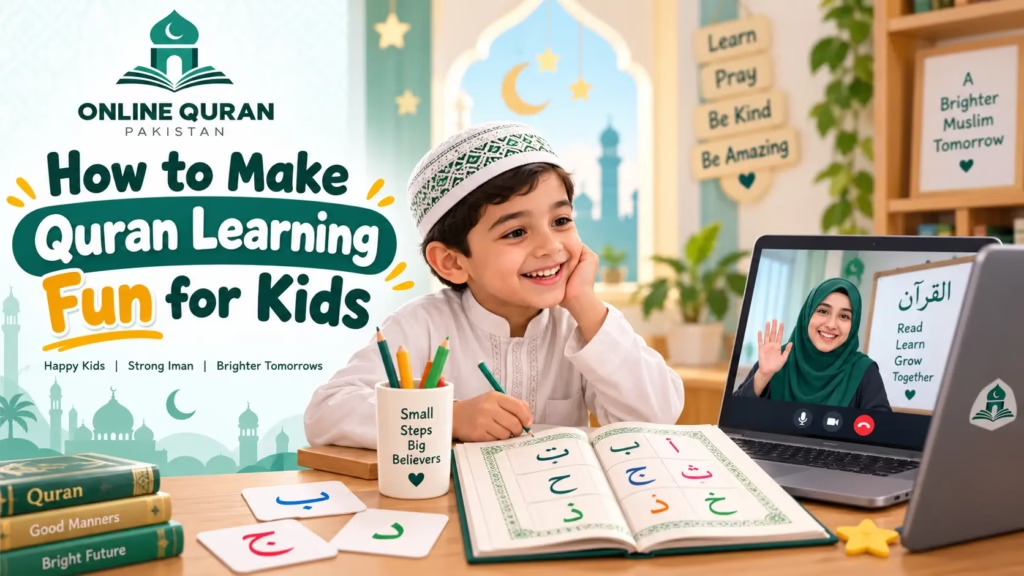
Learning the Quran should be a meaningful part of a Muslim child’s life, but meaningful does not have to mean difficult, stressful, or repetitive.
Children naturally learn through curiosity, imitation, interaction, encouragement, and repetition. When Quran lessons are adapted to those needs, children are more likely to participate willingly and develop confidence in their reading.
So, how can you make Quran learning fun for kids without taking away from the respect and importance of the Quran?
The answer is to make the learning process engaging, not to turn the Quran itself into entertainment.
Short goals, interactive revision, Quran stories, listening exercises, simple games, positive feedback, and a patient teacher can all help children enjoy learning while continuing to improve their recitation.
Quick Answer
To make Quran learning fun for kids, keep lessons short and achievable, use Arabic-letter games, tell Quran stories, let children listen and repeat, celebrate small improvements, connect lessons with daily life, and choose a teacher who adjusts lessons to the child’s age and ability.
Parents who want live, structured support can also explore online Quran classes for kids.
Why Do Children Sometimes Lose Interest in Quran Learning?
When a child resists Quran practice, it does not necessarily mean that the child dislikes learning the Quran.
The actual reason may be much simpler.
The lesson might be too long.
The material may be above the child’s current level.
The child could be tired after school.
Too many mistakes may be corrected at the same time.
The teaching method may involve too much listening and not enough participation.
Or the child may simply need more revision before moving forward.
Before increasing pressure, parents should ask a different question:
“What is making this lesson difficult for my child?”
That question usually leads to a much more useful solution.
15 Ways to Make Quran Learning Fun for Kids
1. Start With Small, Achievable Quran Goals
A child who sees an entire page may think:
“That is too much.”
The same child may happily accept:
“Let’s read these three lines.”
Break Quran learning into small goals.
For a beginner, today’s goal might be identifying three Arabic letters.
For a Qaida student, it might be reading five words correctly.
For a Quran reader, it might be improving one difficult verse.
For a Hifz student, the goal could be memorizing a small passage while revising yesterday’s portion.
Small goals give children more opportunities to experience success.
Parent Tip: Quality matters more than speed. Two lines read carefully can be more valuable than a full page rushed with repeated mistakes.
Children who are still developing their Arabic-reading foundation can benefit from the structured Qaida Course for Kids & Adults.
2. Follow the “Learn, Play, Review” Method
Instead of spending the entire lesson doing the same activity, divide Quran practice into three parts.
Learn
Introduce one new letter, rule, word, or verse.
Play
Use a quick activity connected to that skill.
Review
Finish by revising what was just learned.
For example:
Learn: Practice ب، ت، ث.
Play: Mix three letter cards and ask the child to identify each one.
Review: Read those same letters from the Qaida.
The game supports the lesson rather than distracting from it.
3. Turn Arabic Letter Practice Into a Search Game
Young children often enjoy finding things.
Use that natural interest for Quran learning.
Ask:
“Can you find every ب on this line?”
Then:
“Can you find ت?”
Later, make the challenge slightly harder:
“Which letter has three dots?”
“Which of these letters makes the sound ث?”
You can do this with:
- printed cards;
- Noorani Qaida pages;
- a whiteboard;
- digital flashcards;
- an online classroom screen.
This activity helps children actively recognize letters instead of simply repeating them after an adult.
4. Let Your Child Catch Your Mistakes
Children usually enjoy correcting adults.
Use that to make revision more interactive.
Read a familiar Arabic letter incorrectly on purpose.
Then ask:
“Was that right?”
Or recite the beginning of a familiar short Surah and deliberately pause.
Ask:
“What comes next?”
This technique changes the child’s role from passive learner to active listener.
It can be particularly useful when reviewing material the child already knows.
5. Use Quran Stories to Create Curiosity
Quran learning should not feel limited to pronunciation exercises.
Children can also develop an emotional and intellectual connection with the Quran through age-appropriate stories of the Prophets and events mentioned in the Quran.
You might discuss:
- Prophet Adam (AS);
- Prophet Nuh (AS);
- Prophet Ibrahim (AS);
- Prophet Yusuf (AS);
- Prophet Musa (AS);
- Prophet Yunus (AS).
After the story, avoid simply saying:
“Did you understand?”
Ask more engaging questions:
“What was your favorite part?”
“What did Prophet Yusuf (AS) teach us about patience?”
“What would you do in this situation?”
“What can we practice at home from this story?”
These conversations help children see Quran learning as guidance for life.
6. Try the “Listen, Repeat, Read” Technique
Children often find Quran pronunciation easier when they hear a correct model before trying to read independently.
Use this simple sequence:
| Step | Child’s Activity | Purpose |
| Listen | Hear the teacher or recitation | Become familiar with the sound |
| Repeat | Copy the pronunciation | Practice articulation |
| Read | Read while looking at the text | Connect sound with written Arabic |
Keep the sections short.
A single verse or even part of a verse may be enough.
Students who need more focused pronunciation work can progress through online Tajweed courses.
Parents can also read these easy Tajweed tips for young Quran learners.
7. Correct One Main Mistake at a Time
Imagine a child finishes one line and immediately hears:
“Your Madd was wrong.”
“You missed Ghunnah.”
“You pronounced that letter incorrectly.”
“You stopped in the wrong place.”
“You are reading too quickly.”
Even when every correction is technically valid, too much feedback at once can overwhelm a young learner.
Choose a priority.
For example:
Today’s focus: ق
Let the child concentrate on that sound.
During the next session, you can focus on another issue.
This helps corrections feel manageable.
It also allows children to recognize their own improvement.
8. Create a Quran Progress Board
Children often respond well when progress is visible.
Make a simple chart.
My Quran Journey
| Skill | Progress |
| Arabic letters | ⭐⭐⭐⭐ |
| Joining letters | ⭐⭐⭐ |
| Qaida reading | ⭐⭐⭐ |
| Short Surahs | ⭐⭐⭐⭐⭐ |
| Tajweed practice | ⭐⭐⭐ |
| Daily revision | ⭐⭐⭐⭐ |
Do not compare one child’s chart with another child’s chart.
The purpose is to show:
“Look how much you have learned.”
You can also create milestones:
Milestone 1: Recognize Arabic letters
Milestone 2: Read joined letters
Milestone 3: Complete beginner Qaida lessons
Milestone 4: Begin Quran reading
Milestone 5: Improve Tajweed
Milestone 6: Memorize selected Surahs
A visible learning path makes progress easier for children to understand.
9. Praise Specific Improvement
Instead of saying only:
“Good job.”
Tell the child exactly what improved.
For example:
“MashaAllah, your ق was much clearer today.”
“You remembered yesterday’s lesson without help.”
“You slowed down and pronounced every letter carefully.”
“You corrected your own mistake—that is excellent progress.”
Specific praise teaches children what successful learning looks like.
10. Reward Effort as Well as Results
Rewards can encourage younger children when used carefully.
They should not become the only reason a child studies Quran.
Simple rewards may include:
- a sticker;
- a star on the progress chart;
- choosing the bedtime story;
- extra family playtime;
- choosing a weekend activity;
- enthusiastic recognition from parents.
Try rewarding effort, concentration, consistency, and improvement—not only perfect performance.
A child who struggles with a difficult sound but keeps trying has achieved something important.
11. Let Your Child Become the Quran Teacher
After class, ask:
“What did your teacher teach you today?”
Then say:
“Can you teach it to me?”
Let the child explain:
- an Arabic letter;
- a Tajweed rule;
- a Qaida exercise;
- a short Surah;
- a Dua;
- an Islamic lesson.
Listen without interrupting too quickly.
Teaching something back requires the child to retrieve the information from memory.
It also helps parents discover what the child understood and what still needs clarification.
12. Connect Quran Learning With Everyday Muslim Life
Children understand lessons better when they see why they matter.
If your child learns Surah Al-Fatihah, remind them that they recite it during Salah.
When they learn Bismillah, encourage them to say it before eating.
When they learn Alhamdulillah, talk about gratitude.
When a Quran story teaches patience, kindness, honesty, or trust in Allah, discuss situations where that quality can be practiced.
This turns Quran learning from an isolated class into part of everyday Muslim life.
13. Make Hifz About Retention, Not Just New Verses
Hifz can become stressful when children are constantly judged by how much new material they memorize.
A balanced memorization session should include three areas:
Previous Memorization
Older Surahs or portions that need regular revision.
Recent Memorization
Material learned during the last few lessons.
New Memorization
A manageable new section.
Celebrate strong revision as much as new memorization.
Remembering yesterday’s lesson accurately is progress.
Children ready for systematic memorization can explore the Online Quran Memorization Program.
14. Choose the Right Time of Day
Sometimes the problem is not the lesson.
It is the timing.
A child who has just returned from school may be tired, hungry, or mentally overloaded.
Another child may focus perfectly at that same time.
Observe your child’s routine.
Ask:
When does my child concentrate best?
Does the child need a break after school?
Would an earlier or later lesson reduce distractions?
Is the child trying to learn while hungry or sleepy?
Moving Quran practice by even 30–60 minutes may make a noticeable difference.
Flexible scheduling is one of the reasons some families choose online Quran learning.
15. Choose a Child-Friendly Quran Teacher
A Quran teacher needs knowledge, but teaching children also requires patience and communication.
A child-friendly teacher should know how to:
- explain lessons simply;
- repeat without becoming impatient;
- correct pronunciation respectfully;
- recognize when the learner is confused;
- adjust lesson pace;
- revise weak areas;
- encourage shy children;
- communicate progress to parents.
A young learner should feel comfortable attempting difficult words.
Mistakes must be corrected, but children should not become afraid to read.
Families looking for structured instruction can learn more about online Quran classes for kids.
Fun Quran Activities for Kids by Learning Level
Not every activity suits every learner.
| Learning Stage | Suitable Activities |
| New beginner | Arabic-letter cards, tracing, matching, listening |
| Qaida learner | Find-the-letter, join-the-word, reading challenges |
| Quran reader | Verse reading, listening and repeating, mistake spotting |
| Tajweed learner | Sound comparisons, Madd practice, Tajweed identification |
| Hifz student | Continue-the-verse, listening, revision challenges |
| Older child | Meaning discussions, teaching-back, Tajweed quizzes |
Parents should choose activities according to the child’s actual ability, not simply their age.
A Simple 20-Minute Quran Routine for Kids
Parents often ask how to organize practice at home.
Here is one simple example:
Minutes 1–5: Review
Practice material from the previous lesson.
Minutes 6–12: New Learning
Work on one new letter, word, rule, verse, or memorization portion.
Minutes 13–16: Interactive Activity
Try letter matching, listening, a revision challenge, or “spot the mistake.”
Minutes 17–19: Independent Attempt
Allow the child to read or recite without immediate assistance.
Minute 20: Positive Finish
Mention one specific improvement and explain what will be practiced next.
Remember: This is an example, not a fixed rule. Younger children may need shorter sessions, while older or experienced students may comfortably study longer.
What Parents Should Avoid During Quran Learning
Making Quran lessons more enjoyable also means avoiding habits that create unnecessary pressure.
Avoid Comparing Siblings
Do not say:
“Your sister finished Qaida faster.”
Each child develops differently.
Avoid Focusing Only on Speed
Finishing pages quickly is not the same as reading correctly.
Avoid Correcting Angrily
Correction is necessary. Humiliation is not.
Avoid Teaching Too Many Rules Together
Let children master one concept before adding several others.
Avoid Skipping Revision
New learning becomes weak when previous lessons are not reinforced.
Avoid Making Every Session Feel Like a Test
Children also need opportunities to practice without fear of being judged.
What If My Child Says Quran Lessons Are Boring?
Start by listening.
Ask:
“Which part feels boring?”
You might discover that:
- the child already knows the material;
- the lesson is too difficult;
- the class is too long;
- revision is always done the same way;
- the child needs more interaction;
- the lesson timing is poor;
- the child does not feel comfortable with the teacher.
Once you understand the problem, adjust one thing at a time.
For example, shorten the practice, introduce a revision activity, move the class time, or discuss the difficulty with the Quran teacher.
How Online Quran Classes Can Keep Kids Engaged
Online Quran learning can be interactive when the child participates throughout the lesson.
A teacher can use:
- live recitation and correction;
- screen sharing;
- Arabic-letter activities;
- digital writing;
- listening exercises;
- question-and-answer practice;
- revision challenges;
- visual learning resources;
- one-to-one feedback.
Individual lessons also allow a teacher to slow down when a child needs more practice.
At Online Quran Pakistan, students can explore different Quran-learning options according to their level. The academy currently presents courses including Quran reading, Hifz, Tajweed, Arabic and related studies.
You can view the full Quran course list here.
Parent Checklist: Is My Child’s Quran Learning Approach Working?
Every few weeks, ask yourself:
- Is my child more confident than before?
- Is pronunciation gradually improving?
- Can my child remember previous lessons?
- Is the lesson appropriate for their level?
- Does the teacher correct mistakes patiently?
- Does my child know what they are currently working toward?
- Are we allowing enough revision?
- Is Quran time generally calm rather than stressful?
- Can my child explain something they recently learned?
You do not need a “yes” to every question every day.
Look for steady progress over time.
Frequently Asked Questions
How can I make Quran learning fun for my child?
Keep lessons short and achievable, vary revision activities, use Quran stories, practice through listening and repetition, celebrate small improvements, and allow the child to participate actively rather than simply listening throughout the lesson.
What are some fun Quran games for kids?
Useful Quran-learning games include Arabic-letter hunts, matching cards, continue-the-Surah challenges, spot-the-mistake exercises, listening games, Tajweed identification, and teaching a lesson back to a parent.
How long should a child’s Quran lesson be?
There is no single ideal lesson length. It depends on the child’s age, attention span, Quran level, and learning goal. Younger children often respond better to focused lessons with varied activities than to unnecessarily long sessions.
Should my child learn Noorani Qaida before reading Quran?
A child who cannot confidently recognize Arabic letters and join them into words generally needs a strong reading foundation first. A structured Qaida course can help beginners develop these skills.
How can I make Tajweed easier for children?
Start with correct Arabic-letter pronunciation, teach one rule at a time, use listening and repetition, provide short examples, and correct one main difficulty at a time. More structured support is available through online Tajweed classes.
How can I make Hifz enjoyable for kids?
Use realistic memorization targets, break verses into smaller sections, listen before memorizing, revise older portions regularly, and celebrate accurate retention rather than focusing only on new verses.
What should I do if my child keeps making the same Quran-reading mistake?
Slow the lesson down and focus specifically on that mistake. Demonstrate the correct sound, let the child listen and repeat, practice it in several simple examples, and revisit it during future lessons instead of expecting immediate perfection.
Are online Quran classes good for children?
Online Quran lessons can work well when the teacher actively listens, corrects the child in real time, adjusts the lesson to the student’s level, and keeps the learner involved. Parents can review the academy’s online Quran classes for kids to understand the available format.
Help Your Child Build a Positive Relationship With the Quran
Learning how to make Quran learning fun for kids is not about finding one perfect activity.
It is about creating the right learning environment.
Give children manageable goals.
Let them participate.
Vary revision.
Use stories.
Listen together.
Celebrate improvement.
Allow mistakes to become learning opportunities instead of sources of embarrassment.
And remember that Quran learning is not a race.
A child who progresses carefully, develops correct reading habits, becomes confident in recitation, and grows up with a positive connection to the Quran is building something far more valuable than simply finishing lessons quickly.
Ready to Let Your Child Experience an Online Quran Class?
Parents can explore Online Quran Pakistan to learn more about Quran reading, Qaida, Tajweed, memorization, and other available courses.
If you would like to experience the teaching approach before choosing regular classes, you can book a free trial Quran class.
Start your child’s Quran-learning journey with a lesson matched to their current level—not where someone else thinks they should be.